Facebookやってます

2011年12月17日土曜日

[アシュワース教授]パート5 圧−量ループ その3

その2の続き
下の図のようなPVループの問題を修正する方法


Increase the Peak Inspiratory Flowrate
Many times an easy option to correct this type of patient-ventilator dys-synchrony is to increase the peak inspiratory flowrate so that the set flowrate now meets the patient’s demand. It is important to understand the ventilator to make sure that increasing the peak flowrate does not alter the tidal volume.


最高吸気流速を上げる
多くの場合、このタイプの患者−人工呼吸器非同調を修正するのに簡便な方法は最高吸気流速を上げて患者の需要に見合った吸気流速に設定することです。この場合、人工呼吸器の特性を理解し、吸気流速設定を上げることで換気量が変化することがないように確認することが重要です。


Change to a Rectangular Flow Waveform
When ventilating a patient in volume-targeted ventilation, it is possible on most ventilators to select a decelerating or a rectangular flow waveform. If a decelerating flow waveform is selected, the flowrate gradually decreases throughout inspiration. In some patients, this reduction in flowrate may decrease below the patient’s actual inspiratory flowrate, resulting in patient-ventilator dys-synchrony and the Figure on the PV Loop. If the flow waveform is changed to a rectangular flow waveform, the ventilator will deliver the set peak flowrate throughout inspiration, possibly reducing the patient-ventilator dys-synchrony.


流速波形を矩形波へ変更する
量規定換気の場合、ほとんどの人工呼吸器では漸減波と矩形波のどちらかを選択することができます。漸減波を選択すると、吸気相全般に渡って吸気流速が低下するため、患者によっては実際の吸気流速を下回るところまで減少し、図のような患者−人工呼吸器の不同調に至ることがあります。矩形波へ変更すると、人工呼吸器は吸気全般に渡って設定された一定の吸気流速を維持するため、患者−人工呼吸器非同調を緩和する可能性があります。


Increase the set Tidal Volume
Increasing the set tidal volume may correct the situation. However, it is very important to make sure that the tidal volume is not too high as it may increase the chance of ventilator-induced lung injury.


設定1回換気量を増加させる
設定1回換気量を増加させることで解決できることがあります。しかし、1回換気量を高くしすぎることで、人工呼吸器による肺損傷(ventilator-induced lung injury:VILI)の危険性を高めることのないよう確認することが重要です。


Change to a different Ventilator Mode
Another option is to change the mode of ventilation. If the patient is changed to a pressure-targeted mode of ventilation, the patient will now have control over the inspiratory flowrate. This generally results in an improved patient-ventilator synchrony.


換気モードを変更する
もう一つの方法は、換気モードを変更することです。圧規定換気に変更すれば、患者は吸気流速の規定を受けず、自分でコントロールすることができます。通常は圧規定換気に変更することで患者−人工呼吸器同調性は改善します。


Use of Medications to Improve Patient-Ventilator Synchrony
Medications can be used to improve patient-ventilator synchrony. However, it is important that the patient is not just automatically heavily sedated. Increasing emphasis is being placed on not sedating the patient as much as was done in the past. Instead, appropriate use of pain control and control of anxiety are encouraged. 


患者−人工呼吸器同調性を高めるために薬剤を使用する
患者−人工呼吸器同調性を高めるために薬剤を用いることも可能です。しかし、安易に患者を深い鎮静下に置かないことが重要です。過去に我々がしてきたような過鎮静をしないことが、ますます強調されてきています。その代り、適切な鎮痛と不安への対処が奨励されます。


The next post will discuss “beaking” in a PV Loop that may be caused by over-distension or by a patient activating his expiratory muscles while the ventilator is still delivering a breath.

次回の投稿ではPVループにおける“ビーキング”(くちばし様波形)について述べます。これは過膨張もしくは人工呼吸器がまだ吸気を行っている間に、患者が呼気を開始しようと呼気筋を活動させた場合にみられるものです。 


日本語訳 岩本志津(米国呼吸療法士)

2011年12月16日金曜日

[アシュワース教授]パート5 圧−量ループ その2

お待たせしました。Lonny Ashworth教授のグラフィックレクチャー パート5-2です。前回に引き続き、圧ー量ループの話です。今回から異常波形の説明になります。

ーーーーーーーーーーーーーーーーーーーーーーーーーーーーーーーーーーーーーーーーーーー
As discussed in the previous post, “Part 5 – Pressure-Volume Loop”, the Pressure-Volume Loop (PV Loop) can be used to detect patient-ventilator dys-synchrony. It is important to monitor patients closely to detect patient-ventilator dys-synchrony because this may lead to ventilator-induced lung injury, increased metabolic rate and may even prolong the number of days the patient receives mechanical ventilation.

前回の「パート5 圧‐量ループ」にあるように、圧−量ループ(PVループ)は患者−人工呼吸器非同調の発見に用いることができます。患者−人工呼吸器非同調を密に観察することは重要です。なぜなら肺損傷、代謝率の増加、ひいては人工呼吸器装着期間の延長につながる可能性があるからです。


When the patient’s inspiratory flowrate exceeds the set flowrate during volume targeted ventilation, the airway pressure does not increase as expected, and it actually may decrease. This was discussed in an earlier post discussing the Pressure versus Time waveform, and the waveform is referred to as a Sagging Pressure Versus Time Waveform.

量規定換気において、患者の吸気流速が設定吸気流速を上回った場合、気道内圧は予想される程度までは上昇せず、実際低下することもあります。この現象は過去の圧−時間波形の投稿でも述べましたが、陥没(Sagging)圧−時間波形といいます。


If you observe the PV Loop when a patient’s inspiratory flowrate exceeds the set flowrate, you will notice that the pressure begins to decrease during inspiration and then generally increase at the end of inspiration when the patient exhales. This results in a tracing that is similar to the Figure.

臨床現場でこのようなPVループを観察すると、吸気時に圧がまず低下し、次に吸気の終わりから呼気に移行するときに上昇することに気付くでしょう。この場合、図のような波形となります。


When you look at the tracing below, you can see how the pressure gradually decreased as the volume was being delivered, then increased at the end of inspiration, resulting in the Figure.

図の波形では、規定した換気量が供給される間、圧が徐々に低下し、吸気終末で圧が上昇していることが見て取れます。

When you observe the Figure on a PV Loop, you must try to determine why the patient’s flowrate exceeds the set flowrate. There are many options to correct this situation, however, it is important for the clinician to determine which option is best for that specific patient at that specific point in time.

のようなPVループを見た場合、患者の吸気流速が設定吸気流速を上回る理由を判断する必要があります。この状況を修正する方法はいくつもありますが、それぞれのタイミングでそれぞれの患者に適した方法を選ぶことが重要です。


日本語訳 岩本志津(米国呼吸療法士)


2011年11月23日水曜日

第4回ワークショップ終了

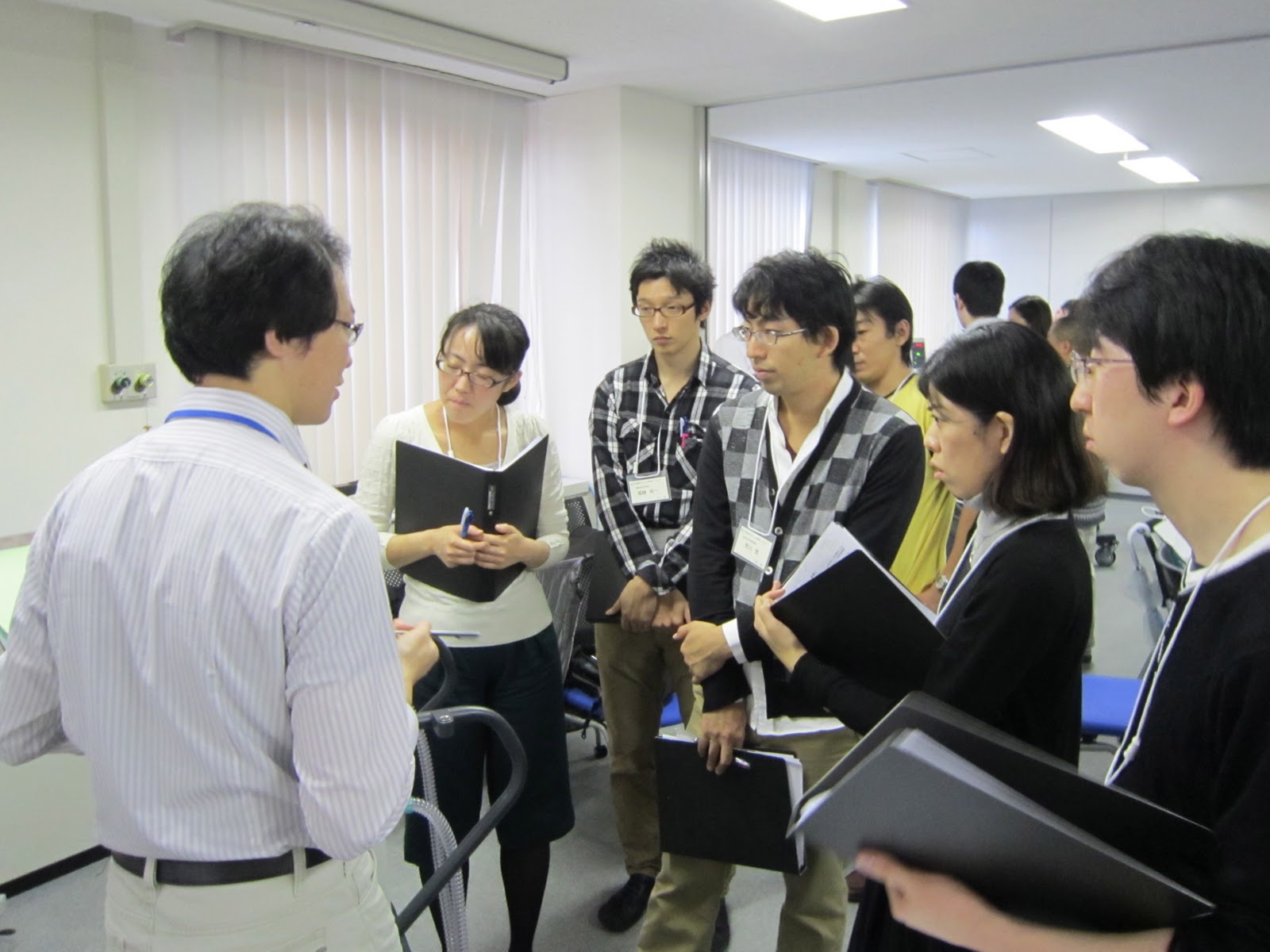
 2011年11月19、20日に第4回若手医師のための人工呼吸器ワークショップが行われました。今回も熱心な方々に受講していただき、充実した2日間となりました。受講された方からコメントの一部を紹介します。
  • 自分で実際にモードの違いを体験してみることは重要で役立ちました。
  • 自分の人工呼吸管理がどれだけ患者に苦痛を与えていたかがわかりました。
  • 難しかったですが、レスピレーターに触って、いろいろな状況を考えながらできてよかったです。
  • ロールプレイはやはりとてもためになる。
  • 実戦向きでとてもわかりやすかったです。
  • とても勉強になる2日間であり、楽しく学ぶことができました。明日からでも自分の病院で積極的に呼吸器をいじって患者さんに良い呼吸を提供したいと思います。

 みなさん、大変お疲れ様でした。ご自身の施設に戻られた後も、どんどん仲間を増やして、より良い呼吸ケアを提供して下さい。

人工呼吸器実習

人工呼吸器実習

人工呼吸器実習

人工呼吸器実習

NPPV実習

NPPV実習

今回のスタッフ

 次回以降のワークショップの予定は決まり次第お知らせいたします。


2011年10月16日日曜日

沖縄呼吸ケア研究会のご紹介

2005年3月、沖縄県内の呼吸療法認定士が発足させ、急性期から慢性期・在宅を含めた呼吸ケアのレベル向上を目的としている研究会です。
年に2回のセミナーや、月に1回の勉強会を開催しています。
先日沖縄に行ったとき、研究会の集まりに参加させていただきました。みなさん、とても楽しい方々で、呼吸ケアだけでなくいろんな話で盛り上がっていました。
彼らはホームページももっていますので、是非立ち寄ってみてください。
研究会の皆様、今後ともよろしくお願いします!

2011年9月30日金曜日

ワークショップに参加された皆様へ

 第1〜3回若手医師のための人工呼吸器ワークショップ、人工呼吸器ブラッシュアップワークショップにご参加下さった皆様。

 すでにメールでご案内しておりますが、今後のワークショップの質をさらに改善するために、これまで受講された方を対象に、アンケートをさせて頂いております。
 ワークショップ受講前後で人工呼吸器の使用方法に変化があったのか、どのような講義が役に立ったのかをお聞きしています。約1分でできる内容ですので、まだご回答頂いていない方がいらっしゃいましたら是非ご協力をお願いします。
 皆さんの貴重なご意見を参考に、ワークショップをさらに実りのあるものにしたいと考えております。お忙しい中、お願いして申し訳ありませんが、よろしくお願いします。
 

第1回若手医師のための人工呼吸器ワークショップ
(亀田総合病院シミュレーションセンターにて)

第2回若手医師のための人工呼吸器ワークショップ
(コヴィディエンジャパン株式会社 板橋事務所にて)

第3回若手医師のための人工呼吸器ワークショップ
(コヴィディエンジャパン株式会社 板橋事務所にて)

人工呼吸器ブラッシュアップワークショップ
(コヴィディエンジャパン株式会社 板橋事務所にて)