Facebookやってます

2012年8月25日土曜日

[アシュワース教授]人工呼吸器のモード コントロール(調節)モード


Control Ventilation
コントロール(調節)換気

This post will address Control Ventilation. Control is a mode of ventilation that is not used often, but is used at times when it is indicated.

このポストではコントロール(調節)換気について述べます。コントロールはあまり使われないモードですが、適応がある場合には使用されます。


Description
説明

Control is a mode of ventilation that does not allow the patient to trigger (or initiate) any additional breaths. Each breath is delivered at the set respiratory rate. The control variable can be volume, pressure or adaptive pressure control. Therefore, it is possible to have Volume-Targeted Control, Pressure-Targeted Control or Adaptive Pressure Control Ventilation.

コントロール換気とは患者自身が追加の呼吸をトリガーする(吸気を開始すること)ことができないモードです。一回一回の呼吸は設定された呼吸回数で送られます。調節する変数は換気量、圧、もしくは適応圧制御です。従って量規定換気、圧規定換気もしくは適応圧制御換気が含まれます。


Advantages
利点

With Control, the patient is not allowed to trigger (or initiate) any additional breaths and the work of breathing should be very low, as long as the ventilator settings meet the patient’s need and the patient does not try to initiate any additional breaths. Because the work of breathing is very low, the oxygenation consumption of the respiratory muscles should be low.

コントロールモードでは、患者は追加の呼吸をトリガーすることができません。そして人工呼吸器設定が患者の需要を満たしており、患者が追加の呼吸を開始しようとしていない限り呼吸仕事量は大変低くなります。呼吸仕事量が大変低いために、呼吸筋群の酸素消費量は低くなります。

Control ventilation should also reduce or eliminate patient-ventilator dys-synchrony, reducing the work of breathing and reducing the chance of ventilator-induced lung injury.

コントロール換気はまた患者-人工呼吸器非同調を減少または消失させ、呼吸仕事量を減少、そして人工呼吸器関連肺傷害のリスクを減少させるでしょう。

Volume-Targeted Control ventilation allows the delivery of a specific tidal volume, with the intent of reducing ventilator-induced lung injury.

量規定の調節換気では人工呼吸器関連肺傷害を減少させながら、決められた一回換気量を送る事が可能になります。


Disadvantages
欠点

There are several disadvantages of using Control. It is generally necessary to heavily sedate or even use neuromuscular blockade to prevent the patient from trying to trigger breaths. This may increase the incidence of prolonged muscular weakness, especially if the patient received steroids. Because the patient is not allowed to trigger any additional breaths, the diaphragm is not allowed to contract. This results in more of the ventilation going to the non-gravity dependent regions of the lung which have reduced perfusion, resulting in a worsened ventilation to perfusion ratio.

コントロールモードを使用する上での欠点がいくつかあります。一般的に患者が呼吸をトリガーしようとする事をふせぐためにしっかりと鎮静をかけるか、もしくは筋弛緩剤を使用する事が必要です。この事により筋力低下が遷延する危険性が高まります。 ステロイドを使用している場合は特にこの現象が見られます。患者は追加の呼吸をトリガーする事が出来ないために、横隔膜は収縮しなくなります。これにより重力がかからない部分の肺(仰臥位では腹側)に換気がより集中する結果となり、換気-血流比が更に悪化します。

Published research articles have demonstrated that when patients are ventilated with Control, the number of ventilator days is increased, and the amount of time that it takes to withdraw the patient from the ventilator is also increased.  Because there is an increased use of sedatives and neuromuscular blockage, there is an increased incidence of hemodynamic problems.

コントロールモードで換気すると、人工呼吸器装着日数が延長し、人工呼吸器から離脱する時間も延長する事がいくつかの文献により証明されています。鎮静薬と筋弛緩薬の使用を増やすために、血行動態の問題を起こす機会を増加させてしまいます。


Clinical Use and Monitoring
臨床での使用とモニタリング

In some patients, Control is used to reduce the work of breathing and reduce the oxygen consumption of the respiratory muscles; therefore, in some patients, oxygenation improves when Control is used.

コントロールモードは呼吸仕事量を減少させ、酸素消費量を減少させるために使用されることがある。従って、コントロールモードを用いた時に酸素化は改善することがある。

Because the patient is not allowed to trigger additional breaths, extra caution should be used when selecting the alarm settings to protect the patient from any mechanical or physiological problems that may arise.

患者が追加の呼吸をトリガーすることを許されないために、起こりうる機械的、生理学的問題から患者を保護するためのアラーム設定には特別の注意が必要です。

As mentioned earlier, it is generally necessary to use sedatives or even neuromuscular blockage to Control the patient. The patient needs to be monitored closely to make sure that he is receiving adequate medications. Also, always make sure that any patient who is receiving neuromuscular blockade is also receiving adequate sedation and pain control.

先に述べたように、一般的に患者の呼吸をコントロールするためには、鎮静薬や筋弛緩薬を使用する事が必要になります。患者が適切な薬物治療を受けている事を確認するために、注意深くモニターする必要があります。また筋弛緩薬を投与されている患者には適切な鎮静薬と鎮痛薬が投与されていることを常に確認してください。

Most critical care ventilators do not allow the true Control Mode. The ventilators allow Assist/Control, which provides a set respiratory rate at which the patient will be ventilated. If the patient is heavily sedated or given a neuromuscular blocking agent, the patient will be in Control, even though the mode displayed on the ventilator is Assist/Control.

現在のほとんどの集中治療用人工呼吸器ではコントロールモードは使えません。設定した呼吸回数で吸気が送られるモードとしてアシスト/コントロール(A/C)モードが使われます。人工呼吸器のモードとしてA/Cと表示されていても、患者が深く鎮静させていたり、筋弛緩薬を投与されている場合には、コントロールモードと同じ機能になります。


Photo
写真

In the following photograph, the patient is being ventilated in Assist/Control (A/C), but is not allowed to trigger any additional breaths and therefore is actually in Control.  Each breath is delivered based upon the timing mechanism within the ventilator, therefore, the set respiratory rate is 10 breaths per minute and the total respiratory rate is also 10 breaths per minute. Each breath is a volume-targeted breath, at the set tidal volume and set flowrate.

次の写真ではA/Cで換気されていますが、自発呼吸がないためコントロールモードと同じになります 。すべての吸気のタイミングは人工呼吸器によって決められます。従って設定呼吸回数は1分間に10回/分(6秒に1回)であり、全呼吸数もまた10回/分となります。すべての呼吸は設定1回換気量と設定流量での量規定換気となっています。


       原文 Lonny Ashworth教授
       日本語訳 マクマーン由香(米国呼吸療法士)

2012年8月22日水曜日

[アシュワース教授]人工呼吸器のモード Adaptive Pressure Control Ventilation


Description
解説

Adaptive Pressure Control is an example of dual control ventilation. Adaptive Pressure Control is called by different names on different ventilators, which makes it more confusing for clinicians. For example, on the Servo 300 and Servo-i, it is called Pressure Regulated Volume Control (PRVC). On the Drager XL and Drager V 500, it is called AutoFlow. On the PB 840, it is called VC+. On the Avea, it is called PRVC or Vsync. Even though it is called different names on different ventilators, it is still basically the same principle. For the purposes of this post, we will call it Pressure Regulated Volume Control (PRVC), as it is the most common term used to describe this option.

 Adaptive Pressure Controlは二重規定換気の一例です。Adaptive Pressure Controlは人工呼吸器の種類によって異なる名称で呼ばれるため、混乱しやすい原因となります。たとえば、サーボ300やサーボiではPRVCDragerXLV500ではAutoFlowPB840 ではVC+AveaではPRVCもしくはVsyncと呼びます。人工呼吸器によって異なる名称で呼ばれていますが、基本的に原理は同じです。今回の投稿では、このモードの呼び方として最も一般的なPRVCで統一することにします。

PRVC tries to combine the advantages of volume control ventilation and the advantages of pressure control ventilation, allowing the clinician to set the target tidal volume, but allowing the patient to control the inspiratory flowrate. This is designed to improve patient-ventilator synchrony and reduce the work-of-breathing. However, as will be discussed below, it does not always result in a reduction in work-of-breathing and may actually increase the patient’s work-of-breathing.

 PRVCは量規定換気と圧規定換気の両者の利点を兼ね備えており、臨床家が目標換気量を設定しつつ、患者が吸気流量をコントロールすることができます。このモードは、患者-人工呼吸器の同調性を改善し、呼吸仕事量を軽減させること目的に設計されました。しかし、下記に示すように常に呼吸仕事量の軽減につながるわけではなく、かえって増大させる場合もあります。 


Target Tidal Volume
目標一回換気量

When using PRVC, the clinician sets the inspiratory time and the target tidal volume. The ventilator delivers a test breath to estimate the patient's compliance and the amount of pressure it will take to deliver the target tidal volume. Then the ventilator delivers a pressure-targeted breath and measures the tidal volume. If the tidal volume is less than the target tidal volume, the ventilator will increase the pressure on the next breath, frequently by no more than 3 cm H2O to try to reach the target tidal volume. If the tidal volume is greater than the target tidal volume, the ventilator will decrease the pressure on the next breath, frequently by no more than 3 cm H2O. The ventilator continues to monitor the tidal volume on each breath and will increase or decrease the pressure on subsequent breaths, generally in small incremental steps, to try to reach the target tidal volume.

 PRVCを用いる際、臨床家は吸気時間と目標一回換気量を設定します。人工呼吸器はテスト呼吸を供給して、患者のコンプライアンスと目標換気量をえるのに要する圧を推測します。それから人工呼吸器は圧規定で換気を行い、一回換気量を測定します。一回換気量が目標一回換気量より少ない場合は、人工呼吸器は次の呼吸で目標一回換気量に到達するよう一呼吸につき3㎝H2Oを超えない範囲で数回にわたり圧を上げます。1回換気量が目標一回換気量より大きい場合は、人工呼吸器は一呼吸につき3㎝H2Oを超えない範囲で数回にわたり圧を下げます。人工呼吸器は毎回の一回換気量をモニターし、目標一回換気量に到達するようと少しずつ段階的に圧を増減させていきます。


Flowrate and Flow Waveform
吸気流量と吸気流量波形

Because the breath is a pressure-targeted breath, the inspiratory flowrate and tidal volume are variable and the flow versus time waveform is decelerating.

 圧規定換気であるため、吸気流量と一回換気量は可変となり、流量-時間波形は漸減波となります。


Effect of Changes in Patient Effort
患者努力の変化による影響

If the patient creates an increased effort, the tidal volume on that breath will be increased. If the tidal volume exceeds the target tidal volume, the ventilator will decrease the pressure on subsequent breaths to reach the target tidal volume. If the patient’s inspiratory effort is decreased, the tidal volume will decrease. When the tidal volume is less than the target tidal volume, the ventilator will increase the pressure on subsequent breaths to reach the target tidal volume.

 患者の吸気努力が増大すれば一回換気量は増加します。一回換気量が目標一回換気量を 超えた場合、人工呼吸器は目標一回換気量を維持しようと次の呼吸で圧を低下させます。 患者の吸気努力が低下すれば、一回換気量は低下します。一回換気量が目標換気量を下回った場合、人工呼吸器は次の呼吸で圧を増加させます。


Effect of Changes in Compliance and Resistance
コンプライアンスと気道抵抗の変化が及ぼす影響

If the compliance decreases or resistance increases, resulting in a tidal volume less than the target tidal volume, the ventilator will incrementally increase the pressure on subsequent breaths to reach the target tidal volume. If the compliance increases or resistance decreases, resulting in a tidal volume greater than the target tidal volume, the ventilator will decrementally decrease the pressure on subsequent breaths to reach the target tidal volume.

 コンプライアンスが低下するか、気道抵抗が上昇した場合、一回換気量は目標換気量を下回り、人工呼吸器は次の呼吸で目標換気量を到達しようと圧を増加させます。コンプライアンスが上昇するか、気道抵抗が低下した場合、一回換気量は目標換気量を上回り、人工呼吸器は次の呼吸で目標換気量に到達しようと圧を下げます。


Advantages
利点

PRVC is designed to allow a target tidal volume to help make sure the patient gets at least the target tidal volume. Because each breath is pressure targeted, the patient has control over the inspiratory flowrate. This may improve patient-ventilator synchrony, be more comfortable for some patients and may decrease the work-of-breathing. Also, the patient is allowed to take a tidal volume greater than what is set.

 PRVCでは、患者が最低でも設定した一回換気量を確実に得られるように設計されています。それぞれの呼吸は圧規定のため、患者は吸気流量を好きなだけ吸うことができます。 これにより患者-人工呼吸器の同調性が改善してより快適となり、また呼吸仕事量を減らせる可能性があります。患者は設定一回換気量以上の一回換気量を吸うこともできます。


Disadvantages
欠点

A stated above, an advantage of PRVC is that the patient can control the inspiratory flowrate and tidal volume; however, this can lead to a disadvantage as well. Some clinicians feel it is not desirable to allow patients to exceed the set tidal volume as it may increase the chance of Ventilator Induced Lung Injury. Another potential disadvantage is that if the patient goes into respiratory distress and increases his inspiratory flowrate and tidal volume, the ventilator decreases the pressure on subsequent breaths as the tidal volume exceeds the target tidal volume. This may result in an increased work-of-breathing, causing further respiratory distress.

 前述したように、PRVCの利点の一つは患者が吸気流量と一回換気量をコントロールできることです。しかし、同時にこれが欠点にもなり得ます。臨床家の中には、設定一回換気量より大きい一回換気量を吸うことで、人工呼吸器惹起性肺障害(VILI)を起こすリスクを増加させるため理想的ではない、という考える人もいます。もう一つの欠点としては、 呼吸不全から患者の吸気流量と一回換気量が増加した際、 一回換気量が目標換気量を超えるため、人工呼吸器は次の呼吸から圧を下げることとなります。これが呼吸仕事量を増大させ、さらに呼吸不全を助長することになります。


Clinical Use and Monitoring
臨床的使用とモニター

PRVC may be used effectively on patients who have a stable respiratory drive. It is important to monitor the tidal volume and set alarms properly to prevent injurious tidal volumes. It is also important to monitor the peak inspiratory pressure. A general guide is that if the patient’s peak inspiratory pressure is less than 20 cm H2O, evaluate the patient closely to determine if the low pressure is caused by a high compliance and low resistance, or if the low pressure is caused by a strong inspiratory effort indicating respiratory distress.

 PRVCは呼吸ドライブが安定した患者であれば効果的でしょう。肺損傷を起こすような一回換気量を避けるために一回換気量をモニターし、適切なアラームを設定することが重要です。最大吸気圧をモニターすることも重要です。一般的な指標としては、最大吸気圧が20H2O以下であれば患者をよく観察して、吸気圧が低いのがコンプライアンスが高く気道抵抗が低いことによるのか、または患者の吸気努力が強いせいなのか(呼吸不全を示唆しているのか)を評価しなければなりません。


ビデオの解説
 コンプライアンス低下のため1回換気量が低下。
 設定の1回換気量(この例では500ml)が供給されるように人工呼吸器が吸気圧を増加させている。


        原文:Lonny Ashworth教授
        日本語訳:森岡志津(米国呼吸療法士)

2012年5月30日水曜日

第7回ワークショップ終了

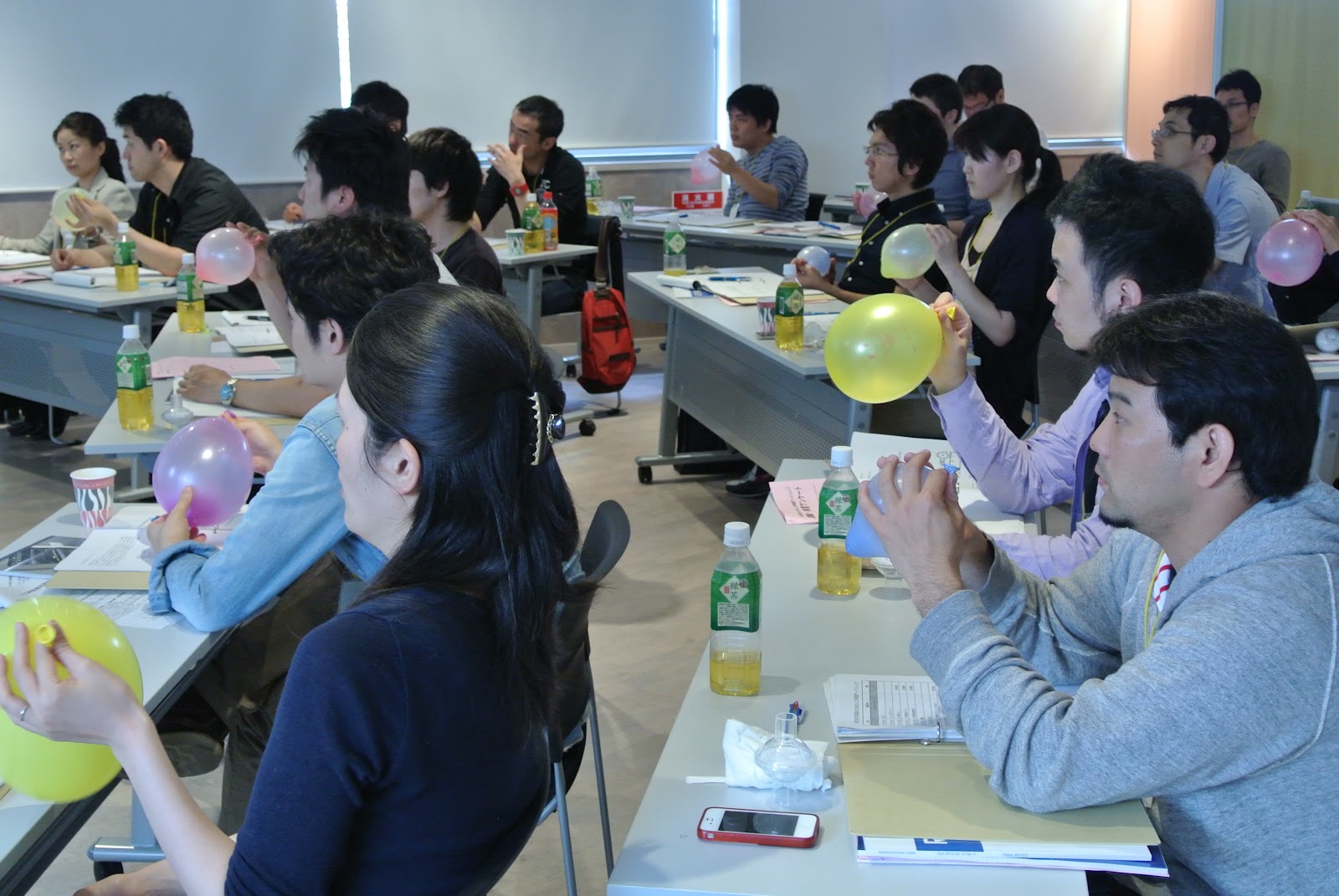
 第7回若手医師のための人工呼吸器ワークショップを無事に終了しました。今回も熱心で元気な先生方のおかげで、充実した2日間になりました。
 受講された方からのコメントの一部を紹介します。


  • 非常に勉強になりました。日頃のささいな疑問にも丁寧に答えていただき参考になりました
  • すごく役立つ内容でした。今後アドバンス的な講習会も開いてほしいです
  • 今まで受けてきた呼吸器に関するセミナーの中でも一番勉強になった。勉強したことを院内にひろめたいと思った。
  • バカな質問とかしたら現場ではそんな余裕ないぞ!とか怒られるのかなと思って参加したのですが、そんなことなくどんなことでも聞ける雰囲気で良かったです。
  • 本当にいろいろとわからなかったところや疑問だったところに手が届いた2日間でした。本当にありがとうございました。
 
 受講された方は、ここで学んだことを持ち帰って、よりよい呼吸ケアに役立ててください。「いざ自分でやってみるとこんなことが分からなかった」などの質問も歓迎しますので、遠慮なくご連絡下さい。

 次回ワークショップの予定は詳細が決まり次第お知らせします。 

人工呼吸器体験実習

肺メカニクスの講義

NPPV実習

最後に全員で集合写真


2012年5月12日土曜日

[アシュワース教授]人工呼吸器のモード VCVその2


Effect of Changes in Compliance and Resistance

コンプライアンスと気道抵抗が変化した際の影響


During volume targeted ventilation, the peak inspiratory flowrate and tidal volume remain constant as compliance or resistance change. However, the peak inspiratory pressure and the plateau pressure will change with changes in the compliance and airway resistance. If the compliance decreases, the peak inspiratory pressure and the plateau pressure will increase. If the airway resistance increases, the peak inspiratory pressure will increase but the plateau pressure will generally not change. If the compliance increases the peak inspiratory pressure and the plateau pressure will decrease. If the airway resistance decreases, the peak inspiratory pressure will decrease, but the plateau pressure will generally not change. In most situations, if the patient’s inspiratory effort increases, the tidal volume will remain constant, but the peak pressure will decrease, and if the patient’s inspiratory effort decreases, the tidal volume will remain constant and the peak pressure will increase. It is important to monitor the patient carefully to limit the patient-ventilator dys-synchrony.

 量規定換気では、コンプライアンスや気道抵抗が変化しても吸気流量と一回換気量は一定となりますが、最高気道内圧とプラトー圧が変化します。コンプライアンスが低下すると、最高気道内圧とプラトー圧は上昇します。気道抵抗が上昇すると最高気道内圧は上昇しますが、プラトー圧は一般的に変化しません。コンプライアンスが上昇すると、最高気道内圧とプラトー圧は低下します。気道抵抗が低下すると、最高気道内圧は低下するがプラトー圧は変化しません。ほとんどの状況では患者の吸気努力が増大すると、一回換気量は一定であるが最高気道内圧は低下し、逆に患者の吸気努力が低下すると一回換気量は一定で最高気道内圧が上昇します。患者−人工呼吸器非同調を最小限にするために、注意深く患者を観察することが重要となります。 


Advantages

利点


The primary advantage of volume targeted ventilation is that the tidal volume is controlled. If the clinician sets the tidal volume, it should remain constant at that level. This is one method of controlling the incidence of volutrauma. In addition, this volume targeted ventilation allows the patient to be ventilated at a specific tidal volume which may be important when trying to ventilate the patient with a low-volume, lung-protective strategy.

 量規定換気の利点は一回換気量を制御できることです。一回換気量設定した量で一定にできるので、容量損傷の発生を予防する方法の一つとなります。さらに、量規定換気では特定の一回換気量で換気することが出来ますが、これは低一回換気量を使った肺保護戦略を行いたいときに重要な意味を持ちます。


Disadvantages

欠点


One disadvantage of volume targeted ventilation is that the airway pressure is not controlled. As mentioned above, as the compliance decreases, the plateau pressure increases. The current, accepted believe is that it is important to keep the plateau pressure less than 30 cm H2O. This requires careful monitoring of the patient to keep the alveolar pressure at an acceptable level.
Another possible disadvantage of volume targeted ventilation is related to the patient’s inspiratory effort. If the patient’s inspiratory effort changes, the chance of patient-ventilator dys-synchrony increases. This is because in volume targeted ventilation, the peak flowrate, flow waveform and tidal volume are set; if the patient’s inspiratory effort changes, it is important to make the necessary changes in the peak inspiratory flowrate, flow waveform or tidal volume to improve patient-ventilator synchrony.

 量規定換気の欠点は気道内圧を制御できないことです。前述したように、コンプライアンスが低下するとプラトー圧は上昇します。現在の共通認識として、プラトー圧を30H2O以下に維持することが重要とされていますので、肺胞内圧を許容値に維持するためには綿密に観察する必要があります。
 量規定換気のもうひとつの欠点は患者の吸気努力に関連します。患者の吸気努力が変化すると、患者−人工呼吸器非同調の危険性も増大します。これは、量規定換気では最高吸気流量、流量波形、一回換気量が決められているためで、患者の吸気努力が変化した場合には、患者−人工呼吸器の同調性を向上させるため最高吸気流量、流量波形、一回換気量を随時変更することが重要となります。


Options Available on Some Ventilators

特定の人工呼吸器におけるオプション機能


It is important to understand the ventilator you are using to ventilate your patient because it may have options that affect the delivery of the set tidal volume. For example, if demand breaths (or demand flow) are available during Volume A/C, the patient may actually receive a much larger tidal volume than is set, if the patient actively inhales. Another example, is that the ventilator may appear to be in Volume A/C, but actually the ventilator may be in PRVC A/C.

 人工呼吸器には、設定一回換気量を供給するのに影響を与えるオプション機能が存在することがあるため、病院で使用している人工呼吸器を理解することが重要となります。たとえば、Volume A/C(アシストコントロール)モードにデマンドフローがついている場合、患者が吸気努力をすると設定よりも大きい一回換気量で換気されることがあります。また、Volume A/Cで換気されているように見えて、実際はPRVC A/Cであるということもあります。


The next post will discuss adaptive pressure control ventilation; Pressure Regulated Volume Control (PRVC) is an example of adaptive pressure control.

次回の投稿では適応圧制御換気について述べます。PRVCは適応圧制御換気の一つです。


         原文:Lonny Ashworth教授
         日本語訳:森岡志津(米国呼吸療法士)

2012年5月10日木曜日

[アシュワース教授]人工呼吸器のモード VCVその1


Volume Targeted Ventilation

量規定換気

In volume targeted ventilation, flow or volume is the control variable. This means that the clinician must set the peak flowrate, the inspiratory flow waveform and the tidal volume. The ventilator is designed to deliver the set tidal volume as the patient’s airway resistance, compliance or inspiratory effort change.

 量規定換気で制御するのは吸気流量または一回換気量です。すなわち最高吸気流量、吸気流量波形、及び一回換気量を設定しなければなりません。人工呼吸器は患者の気道抵抗、コンプライアンス、吸気努力の変化などに応じて設定された換気量を供給するように設計されています。


Tidal Volume

一回換気量


During Volume Targeted Ventilation, the clinician sets the tidal volume. It is important to make sure that the tidal volume selected does not increase the chance of Ventilator Induced Lung Injury, and that the tidal volume is appropriate for the patient’s predicted body weight and disease state. The initial tidal volume is usually 8 – 10 mL per kilogram of the patient’s predicted body weight. However, for patients with a low compliance, and especially for patients diagnosed with ARDS, the tidal volume may be as low as 4 – 6 mL per kilogram of the patient’s predicted body weight.

 量規定換気では医療従事者が一回換気量を設定しますが、設定した一回換気量がVILI(人工呼吸器関連性肺損傷)の危険性を増すことがなく、かつ患者の予測体重や疾患の状態に適したものであることを確認しなければなりません。初期設定における一回換気量は、通常の場合予測体重あたり8-10ml/㎏にします。しかしコンプライアンスが低い場合や、特にARDSと診断された患者では、患者の予測体重あたり4-6ml/㎏の最低限の一回換気量とします。


Flow Waveform

吸気流量波形


At the beginning of inspiration, the ventilator will deliver the set peak flowrate. If a rectangular flow waveform is selected by the clinician, the flowrate will remain constant at the set peak flowrate until the tidal volume is delivered, at which time inspiration will end and expiration will begin. A rectangular flow waveform may be useful if the patient’s inspiratory time is short or if the patient needs a prolonged expiratory time. For example, if a patient has AutoPEEP, it may be useful to reduce the inspiratory time by using a rectangular flow waveform, which increases the expiratory time and may help to reduce the AutoPEEP.

 人工呼吸器は吸気の開始時に設定された最高吸気流量を供給します。矩形波を選択した場合、設定した一回換気量に到達するまで最高吸気流量は設定した値のまま一定に維持されます。そして吸気が終了すると呼気へ移行します。矩形波が適しているのは患者自身の吸気時間が短い場合や、呼気時間が通常より長く必要な患者の場合です。Auto PEEPのある患者では、矩形波を選択することで吸気時間を短くして呼気時間を長くとることでAuto PEEPを減らせることがあります。

上:圧、中:流量、下:換気量


If a decelerating flow versus time waveform is selected, the ventilator will gradually reduce the flowrate to a default level; inspiration will end when the tidal volume has been delivered. On most ventilators, because the average flowrate is lower when using the decelerating flow waveform, the inspiratory time is increased. This will generally decrease the expiratory time and may increase the chance of AutoPEEP. Because the flow decelerates when using a decelerating flow waveform, the gas flow is less turbulent, resulting in a better distribution of ventilation. In addition, because the inspiratory time is increased, the mean airway pressure is usually increased as well. This may cause problems with the patient’s blood pressure, especially if the patient is hypovolemic or has a poorly functioning left ventricle.

 漸減波を選択した場合、吸気流量はデフォルトレベルに達するまで徐々に低下し、設定された一回換気量に到達した時点で吸気が終了します。ほとんどの人工呼吸器では、漸減波の方が矩形波よりも平均吸気流量が低いため、吸気時間は長くなります。このため呼気時間は短くなり、Auto PEEPが起こる危険性が増します。漸減波では吸気流量は低くなるため、乱流が少なくなり換気分布が改善します。また吸気時間が長くなるため平均気道内圧は上昇しますが、これにより低血圧をひき起こす可能性があります。低血圧は特に循環血液量が少ない患者や、左室機能が不足している患者で起こりやすくなります。

上:圧、中:流量、下:換気量


Peak Flowrate

最高吸気流量


The peak flowrate is usually set between 40 – 70 LPM. On most ventilators, as you increase the peak flowrate, the inspiratory time decreases. It is important to make sure that the peak flowrate and flow waveform meet the patient’s inspiratory needs. Generally, the peak flowrate should be increased when using a decelerating flow waveform.

 吸気流量は通常40-70LPML/分)に設定します。ほとんどの人工呼吸器では、最高吸気流量を上げると吸気時間は短くなります。最高吸気流量と吸気流量波形が患者の要求を満たしているのを確認することが重要となります。漸減波を用いる際は一般的に最高吸気流量高く設定します。

Inspiratory Pause

吸気ポーズ


On many ventilators an inspiratory pause, also called inspiratory hold or inspiratory plateau, can be set. When an inspiratory pause is selected, the ventilator will deliver the selected peak flowrate, flow waveform and tidal volume; however, the ventilator will keep the expiration valve closed for the amount of time the inspiratory pause was set, resulting in a breath hold. An inspiratory pause will increase the mean airway pressure and is likely to result in patient-ventilator dys-synchrony. Currently, an inspiratory pause is rarely used, expect when measuring the plateau pressure.

 多くの人工呼吸器では吸気ポーズ(吸気ホールド、吸気プラトーなどとも呼ばれる)を設定することが可能です。吸気ポーズを選択した場合、人工呼吸器は設定した最高吸気流量、流量波形、一回換気量を供給しますが、吸気ポーズの設定をもとに呼気バルブを閉じて息こらえの状態にします。吸気ポーズは平均気道内圧を上昇させますが、患者−人工呼吸器非同調の原因となることがあります。現在、吸気ポーズはプラトー圧を計測する以外にはほとんど使用されません。


上:圧、中:流量、下:換気量


VCVその2へ続く。


        原文:Lonny Ashworth教授
        日本語訳:森岡志津(米国呼吸療法士)